Introduction
Few television dramas have built the kind of lasting bond with viewers that Call the Midwife has. Created by Heidi Thomas and originally inspired by the memoirs of Jennifer Worth, the series began with a simple but powerful idea: tell the story of nurses, nuns, mothers, and families in the East End of London with honesty, warmth, and emotional depth. From the beginning, the show was rooted in both social history and deeply personal storytelling, which is one reason it has remained so beloved for so long.


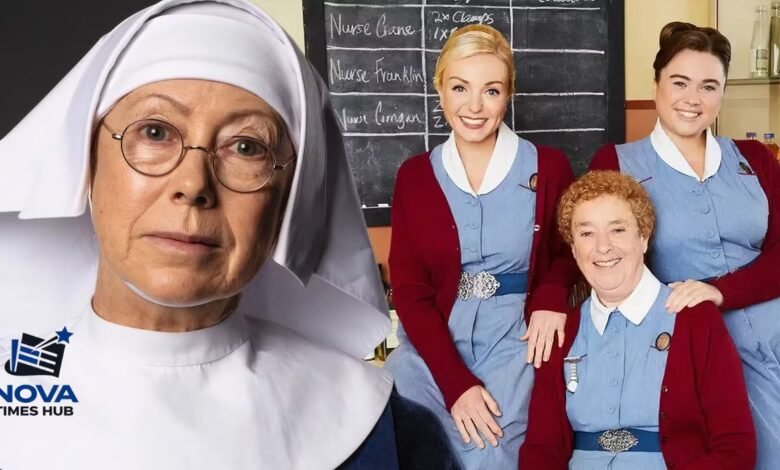
When people search for the cast of call the midwife, they are usually looking for more than a list of names. They want to understand why this ensemble has mattered so much, which actors shaped the series in its early years, who still anchors the show today, and how the cast has changed as the story has moved from the late 1950s into the early 1970s. As of Season 15, the series still features key long-running stars such as Jenny Agutter, Helen George, Laura Main, Stephen McGann, Judy Parfitt, Linda Bassett, Cliff Parisi, and several newer regulars who now feel fully at home in Poplar.
What makes this cast stand out is not only talent. It is the sense of trust they create. Week after week, the performances feel lived-in rather than performed. The actors do not simply play roles; they carry the history of these characters with them. That continuity has helped the series keep its heart, even as faces have come and gone.
BIO
| Topic | Details |
|---|---|
| Article Title | A Closer Look at the Cast of Call the Midwife |
| Focus Keyword | cast of call the midwife |
| Category | Entertainment |
| Subcategory | TV Shows |
| Content Type | Informative Blog Article |
| Word Count | 1400+ words |
| Tone | Professional and Human-Friendly |
| Target Audience | TV Drama Fans |
| Main Focus | Cast Insights and Character Evolution |
| Show Covered | Call the Midwife |
| Content Style | In-depth and Easy to Read |
| Purpose | Inform and Engage Readers |
The Original Strength
The earliest success of Call the Midwife was built on an ensemble that felt unusually balanced. The BBC’s original press material introduced the first regular cast as Jessica Raine, Jenny Agutter, Pam Ferris, Miranda Hart, Judy Parfitt, Helen George, Bryony Hannah, and Laura Main, with Vanessa Redgrave providing narration as the mature Jenny. That line-up gave the show its foundation: youth and experience, discipline and mischief, tenderness and steel.
At the center of the first chapter was Jessica Raine as Jenny Lee, the young midwife whose arrival at Nonnatus House opened the door for viewers. Through Jenny, the audience first encountered the hardship, humor, and humanity of postwar Poplar. Her character offered a natural point of entry because she was learning this world at the same time the audience was. When Raine left after the third series, it marked the end of the show’s first era, but by then the wider cast had become strong enough to carry the story forward.
That transition says a great deal about the strength of the ensemble. Many series struggle when an early lead departs. Call the Midwife did not collapse because it had never really depended on one character alone. From the start, it was built as a community drama. The mothers of Poplar mattered. The sisters mattered. The friendships mattered. The cast worked because the show treated every life on screen as meaningful.
The Long-Running Core
If there is one performer who represents the moral center of the series, it is Jenny Agutter as Sister Julienne. She has played the character since the first series, and her performance remains one of the chief reasons the show continues to feel grounded. Sister Julienne is not flashy. She does not need to be. Her compassion, steadiness, and quiet authority give Nonnatus House its shape. In later seasons, as younger midwives face difficult choices and the institution itself comes under pressure, Agutter’s calm presence becomes even more important.
Helen George as Trixie Franklin, now Trixie Aylward, has had one of the richest long-term character arcs in the drama. Introduced as glamorous, witty, and stylish, Trixie could easily have been written as a lighter figure in a serious series. Instead, the performance has given her layers year after year. The show has trusted George with storylines involving addiction, heartbreak, ambition, and professional responsibility. By Season 15, Trixie is no longer only the fashionable one. She is one of the series’ most mature and resilient figures.
Laura Main has played Shelagh Turner, first known as Sister Bernadette, with remarkable warmth. Her journey from religious life to marriage and motherhood could have felt abrupt in a lesser drama, but Main made it feel deeply human. Shelagh carries a gentleness that never slips into weakness. Across the years, she has remained one of the emotional anchors of the series, someone who can move easily between private family life and public service.
Alongside her, Stephen McGann as Dr. Patrick Turner has become one of the defining faces of the show. Dr. Turner is the bridge between home, medicine, and the wider changes happening in British healthcare. His work often places him at the center of the series’ most difficult medical stories, but McGann plays him with humility rather than heroic showmanship. That choice fits the tone of Call the Midwife perfectly. He is devoted, practical, and deeply human.
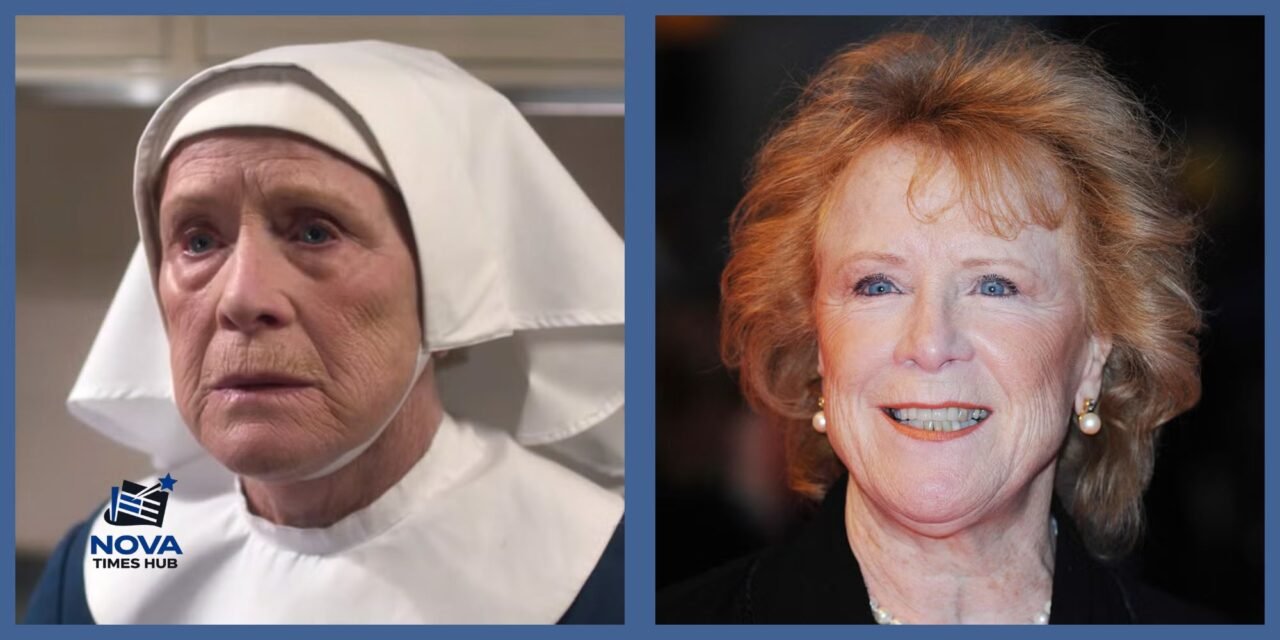
Then there is Judy Parfitt as Sister Monica Joan, one of the most unforgettable characters in the show’s history. She is eccentric, fragile, poetic, and at times surprisingly sharp. In another drama, such a character might be reduced to comic relief. Here, Parfitt has turned Sister Monica Joan into something far more moving: a reminder of age, memory, faith, and the quiet dignity of being cared for as well as caring for others. Her presence has given the series some of its strangest, saddest, and most beautiful moments.
The Wider Family
One reason the cast of call the midwife feels so full is that the show has never focused only on the midwives themselves. Over time, supporting figures have become essential to the emotional fabric of Poplar. Cliff Parisi as Fred Buckle brings humor, decency, and a lived-in sense of community. Annabelle Apsion as Violet Buckle adds firmness and local political energy. Georgie Glen as Miss Higgins has gradually turned what could have been a rigid bureaucratic role into one of the series’ most quietly touching parts. Daniel Laurie as Reggie Jackson gives the show some of its gentlest emotional notes.
Linda Bassett deserves special attention for her work as Nurse Phyllis Crane. She arrived after the earliest seasons, but she now feels inseparable from the show’s identity. Bassett gives Phyllis an unusual combination of briskness and tenderness. She can be funny without ever seeking attention, and firm without seeming cold. In many ways, Phyllis represents what Call the Midwife does so well: she is competent, practical, and unsentimental, yet full of buried feeling.
The cast also benefits from continuity in narration. Vanessa Redgrave has remained the voice of Jennifer Worth, even long after Jessica Raine’s on-screen departure. That narrative thread matters more than it may seem at first. It reminds viewers that the series is still connected to memory, reflection, and the passage of time. The voice-over gives the show its literary texture and helps tie many different eras of the cast together.
Notable Departures
No long-running drama stays exactly the same, and part of the story of the cast of call the midwife is the story of who left and what their absence meant. Jessica Raine’s departure after series three was the first major turning point. Because Jenny Lee had introduced viewers to Poplar, her exit could have felt like a rupture. Instead, it became a sign that the show trusted its full ensemble enough to move beyond one original point of view.
Miranda Hart as Chummy remains one of the most fondly remembered early stars. Chummy brought a rare kind of sweetness to the series: awkward, funny, kind, and completely sincere. Her absence was strongly felt because the character offered a different kind of energy from the rest of the cast. Reports at the time made clear that Hart did not return because of scheduling difficulties and work commitments, not because the character lacked a place in the show. That matters, because Chummy is still remembered with real affection by viewers.
Another important shift came when Bryony Hannah, Emerald Fennell, and Kate Lamb were confirmed as not returning for series seven. Their exits changed the emotional texture of the ensemble. Hannah’s Cynthia, Fennell’s Patsy, and Lamb’s Delia had all become meaningful parts of the show’s middle years. At the time, a spokesperson told Radio Times that comings and goings were simply part of life in such a large ensemble, while also emphasizing that the core team remained central. That statement captured something true about the series: loss is part of its design, but renewal is as well.
These departures did not weaken the series so much as change its rhythm. Each goodbye left a different emotional echo. Some exits felt bittersweet, others abrupt, but together they kept the drama honest. In real communities, people do leave. Friendships change. Work moves on. Call the Midwife has always understood that continuity is not the same thing as stillness.
Newer Faces
By the time the show reached its more recent seasons, the cast had expanded in ways that reflected a changing Britain and a changing Poplar. Season 15 includes regulars such as Rebecca Gethings as Sister Veronica, Renee Bailey as Joyce Highland, Natalie Quarry as Rosalind Clifford, Molly Vevers as Sister Catherine, and Zephryn Taitte as Cyril Robinson, alongside the long-running core. The result is an ensemble that still feels familiar while making room for different backgrounds, temperaments, and generational viewpoints.
Earlier recent seasons also featured Megan Cusack as Nancy Corrigan, another character who helped refresh the emotional balance of the series. By the mid-2020s, the show had clearly entered a different social era from its beginnings, and the casting reflected that change. The stories were no longer just about the immediate aftermath of the war or the baby boom years; they had moved into a period shaped by new pressures, debates, and expectations. The ensemble had to grow with that shift, and it did.
This is one of the show’s quiet achievements. It does not replace old characters with obvious copies. Instead, it introduces new personalities who create fresh tensions and fresh forms of care. That is why the cast continues to feel alive rather than merely preserved.
Why It Works
The deeper reason the cast of call the midwife works so well is chemistry. Even in the earliest BBC material for the show, the performers themselves talked about how naturally the group came together. Helen George said the cast “gel” and that there was “not a bad egg,” while Jenny Agutter spoke warmly about the young talent joining the ensemble. Those comments might sound simple, but they point to something viewers can feel on screen. This series has always depended on believable shared life: dinner tables, bicycle rides, rushed deliveries, tense meetings, quiet recoveries. Without trust between performers, none of that would land the same way.
The show also benefits from casting that values emotional intelligence over performance tricks. These actors know how to play silence, restraint, and ordinary care. In a story about childbirth, grief, poverty, loneliness, and social change, those qualities matter. There are dramatic moments, of course, but the lasting impact usually comes from the smaller choices: a hand on a shoulder, a pause before difficult news, a look exchanged across a room. The cast understands that the series is strongest when it feels close to life.
Another strength is balance. The ensemble includes comic performers, classical actors, younger stars, and veterans with decades of screen and stage experience. Jenny Agutter, for example, brought an established reputation to the series, while other actors grew into household names through the show itself. That mixture helps explain why the drama never feels too polished or too self-conscious. It is professional, but it still feels warm.
Its Lasting Appeal
Part of the continuing appeal of Call the Midwife is that its cast has allowed the series to age without losing itself. The show started in 1957 and, by recent seasons, had moved into the early 1970s, carrying viewers through changes in medicine, family life, women’s roles, and public life. That historical movement only works because the cast gives it emotional continuity. The audience does not just watch social history unfold; it watches familiar people live through it.
By Season 15, the current ensemble still reflects that balance between continuity and renewal. Long-time viewers can still find the figures who first made them care about Poplar, while newer characters keep the world open and evolving. That is a rare achievement for any long-running drama, and it speaks directly to the care with which the cast has been built and maintained.
Conclusion
Looking closely at the cast of call the midwife means looking at one of television’s most carefully sustained ensembles. From Jessica Raine’s early work as Jenny Lee to the enduring presence of Jenny Agutter, Helen George, Laura Main, Stephen McGann, Judy Parfitt, and many others, the series has shown that great casting is not just about star power. It is about trust, tone, and emotional truth.
What viewers remember most is not only who was in the cast, but how they made Poplar feel. They made it compassionate without becoming sentimental, funny without losing seriousness, and intimate without becoming small. That is why the show has lasted, and why people keep coming back to it. In the end, the cast of Call the Midwife is not simply a group of performers attached to a successful series. It is the living heart of the drama itself.
Rachel Reeves Car Tax Changes: What Drivers Need to Know
FAQ
Who is the most popular character in Call the Midwife?
Trixie Franklin is often considered one of the most popular characters due to her development and emotional storylines over the years.
Is the original cast of Call the Midwife still in the show?
Some original cast members, like Jenny Agutter and Judy Parfitt, are still part of the series, while others have moved on.
Why did Jenny Lee leave Call the Midwife?
Jessica Raine left the show to explore other acting opportunities, and her character’s story reached a natural conclusion.
Are new characters still being added to the show?
Yes, the series continues to introduce new characters to reflect changing times and keep the story fresh.